
Tool & Die Design
Tool & Die Design
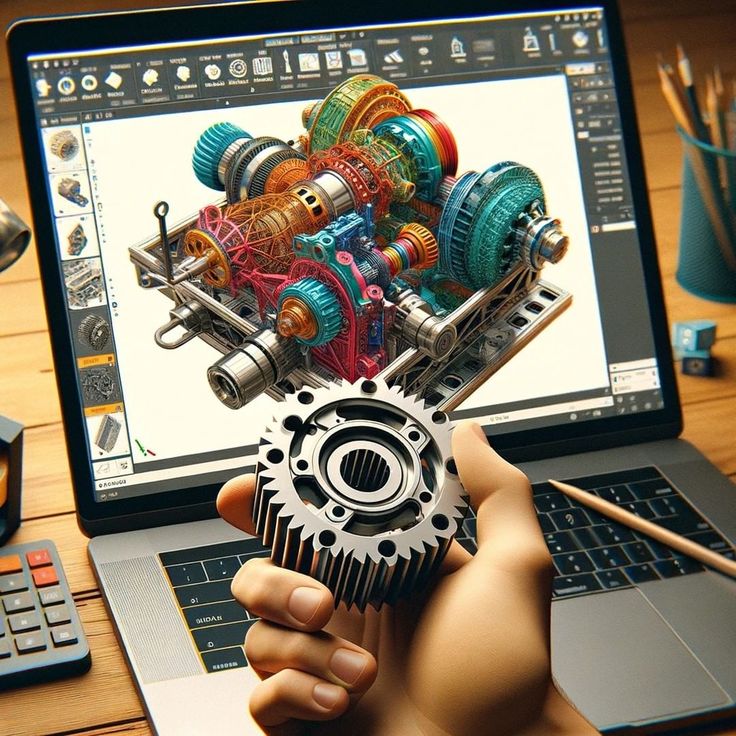
The Tool & Die Design course offers an in-depth exploration into the heart of manufacturing – the tools and dies that shape, form, and create components with utmost precision. This comprehensive training is designed for individuals aiming to master the design and development of various types of tooling required in metal forming, cutting, and plastic molding processes. The course integrates core engineering principles with hands-on CAD-based design practices to equip learners with the skills to produce accurate, durable, and cost-effective tools used across industries. Whether it’s designing a progressive die for high-speed stamping or a plastic injection mold for intricate parts, this program ensures learners are ready to contribute to production efficiency and product excellence.
🛠️ Covered Tool Types and Specializations
This course spans a wide spectrum of tooling categories. In press tool design, students will master simple dies, compound dies, progressive dies, and combination dies used in operations such as blanking, piercing, bending, drawing, notching, and coining. In plastic mold design, the course includes design of core and cavity systems, runner balancing, gating systems, ejection methods (pin, sleeve, stripper), and cooling circuit optimization. Additionally, jig and fixture design is covered to support CNC machining, inspection, and assembly processes.
🏭 Industry Applications and Engineering Value
Tool & Die Design professionals play a mission-critical role in ensuring product quality, production speed, and cost control. In sectors like automotive, aerospace, electronics, packaging, consumer goods, and heavy engineering, well-designed tools are key to high-volume manufacturing success. With growing emphasis on lightweight materials and precision forming, modern tooling demands skills in digital design, tolerance stack-up analysis, and predictive failure modeling.
Exercises & Workshops
- 🧠 Real-world design and drafting projects
- 🧠 Industry-specific modeling tasks
- 🧠 🧪 Practice files for hands-on learning
🎓 Eligibility
- 🎯 B.E. Graduates – Mechanical / Chemical / Production / Automotive
- 🎯 Diploma holders in Engineering streams
- 🎯 👷♂️ Working professionals – Design Engineers & CAD Technicians
Course Duration & Duration
- ⏳ 60 Hours – 1 Month Intensive Program
- 🏅 Certification in Unigraphics / Siemens NX CAD
🧠 Learning Objectives and Technical Scope
The training begins with a foundation in tool design theory, introducing students to essential principles such as material behavior under stress, fit and tolerance selection, and the role of precision in high-volume manufacturing. Learners will explore how to conceptualize and engineer press tools, mold assemblies, gauges, jigs, and fixtures from scratch. Topics such as die clearances, press capacity calculation, stripping methods, ejector systems, shrinkage compensation, and thermal analysis are covered in detail. CAD tools such as SolidWorks, CATIA, NX, and AutoCAD are used to model, simulate, and validate tool performance.
Advanced modules include strip layout design, punch and die inserts, die set selection, cooling system design for plastic molds, and selection of materials like tool steels, HSS, and carbide grades. Students will learn how to incorporate design-for-manufacturing (DFM) and design-for-assembly (DFA) principles to improve tool efficiency, ease of maintenance, and longevity.
📋 Eligibility Criteria
- 🔷 Diploma or Degree holders in Mechanical, Production, or Tool Engineering
- 🔷 Working professionals in manufacturing or design industries
- 🔷 Students with basic CAD skills and engineering drawing knowledge
- 🔷 Tools Those aspiring to work in product R&D, design, or tool manufacturing
💼 Career Opportunities
- 🔷 Product Design Engineer
- 🔷 Tool Design Engineer (Molds / Dies)
- 🔷 CAD Engineer – Tooling
- 🔷 R&D Engineer (Plastic / Sheet Metal Products)
- 🔷 Manufacturing Support Engineer