
Suspension & Breaking System
Suspension & Breaking System
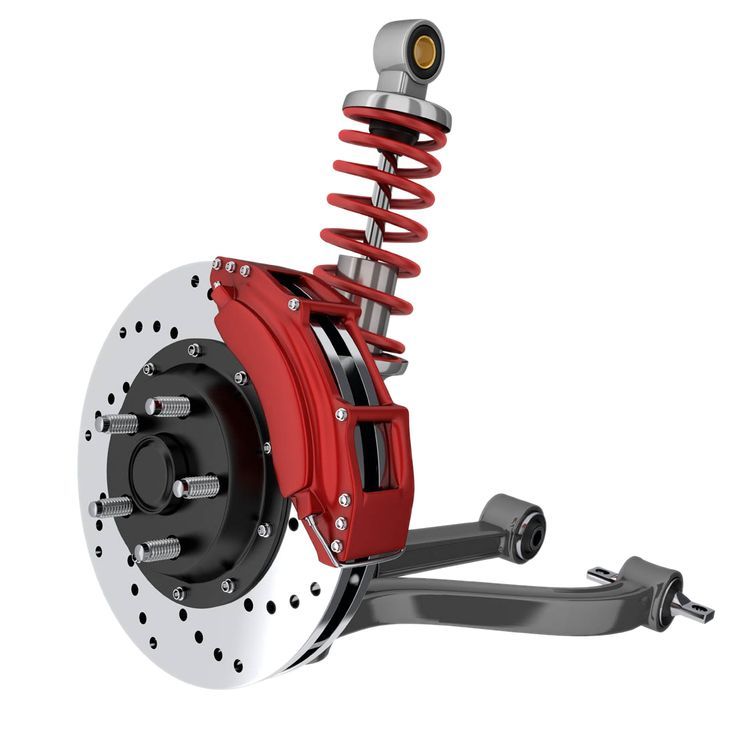
The Suspension & Braking System Engineering course is a specialized training program that delves into the principles, design, and functionality of the two most critical systems in any automobile: the suspension system and the braking system. It focuses on the structural behavior, performance dynamics, and safety mechanisms of these systems under various driving conditions.
This course blends mechanical engineering theory with real-world applications, providing a solid foundation in suspension geometry, damping forces, vibration control, brake force distribution, and system integration. Whether you’re working on traditional vehicles or modern EVs, understanding these systems is vital for achieving optimum ride quality, control, and occupant safety. Through this program, learners gain the analytical and simulation skills required to evaluate system behavior, design improvements, and develop next-generation automotive solutions.
👨🎓 Who Should Enroll?
This course is suitable for a wide range of learners including undergraduate and postgraduate engineering students (Mechanical, Automotive, Mechatronics), professionals working in vehicle design, performance testing, or quality control, and enthusiasts looking to deepen their understanding of automotive systems.
if you’re preparing for a role in vehicle dynamics, suspension tuning, braking system calibration, or simulation-based design, this course provides the necessary foundation and advanced application knowledge. Even entry-level professionals in Tier-1 and Tier-2 automotive suppliers will benefit greatly from the real-world case studies and project-based learning embedded in this curriculum.
🛠 Tools & Technologies
Students will work with industry-relevant design and simulation tools throughout the course. MSC Adams is used for multibody simulations of suspension mechanisms, analyzing wheel travel, camber gain, and ride characteristics. MATLAB/Simulink is employed to model dynamic control responses and perform simulation of braking events under varying road and load conditions.
CarSim is introduced for vehicle-level dynamic testing, helping students understand how modifications in suspension and braking systems affect handling and safety. In the design phase, SolidWorks, CATIA, or Creo are used for 3D modeling and assembly of system components. The software exposure ensures learners are industry-ready with tools most commonly used by automotive OEMs and R&D firms.
🎯 Why Choose This Course
With increasing complexity in modern vehicle design, knowledge of suspension and braking systems has become indispensable for automotive engineers. This course not only covers the fundamentals but also integrates advanced topics such as adaptive suspension, electronically controlled braking, and dynamic simulation. Learners gain exposure to industry-standard software and tools, enabling them to perform real-time simulations and analyses of vehicle behavior. Choosing this course means you’re stepping into a highly specialized field with a direct impact on road safety, handling performance, and driving comfort. It’s especially relevant for professionals aiming to work in design, R&D, or testing departments of automotive OEMs, suppliers, or motorsport teams. This program also equips students with skills in predictive engineering and virtual prototyping, making them job-ready for modern engineering challenges.