
Plant & Piping Design
Plant & Piping Design
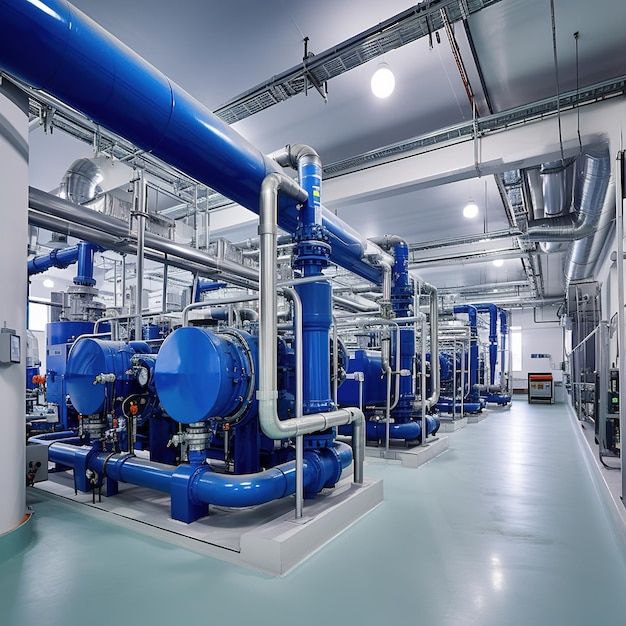
Piping and Plant Engineering is a specialized engineering discipline that focuses on the design, layout, and analysis of piping systems and mechanical components in industrial plants such as oil refineries, chemical factories, power plants, water treatment plants, and pharmaceutical industries. This course equips learners with the knowledge and tools to plan and model intricate piping networks that transport fluids and gases under varying pressure and temperature conditions.
Students gain hands-on experience in 3D modeling, isometric drafting, piping codes & standards, stress analysis, and equipment layout planning, making them industry-ready for a wide range of mechanical and process engineering roles.
🌍 Industry Importance
Piping systems are at the heart of industrial infrastructure, playing a vital role in ensuring that processes operate efficiently, safely, and without interruption. An expertly designed piping layout minimizes pressure loss, prevents corrosion and vibration issues, and ensures smooth fluid transfer. Plant engineering further ensures that equipment such as pumps, boilers, tanks, and compressors are laid out optimally for safety, maintenance, and space utilization.
In industries where downtime can cost millions, the contribution of a skilled piping engineer is both strategic and indispensable. From the energy sector to pharmaceuticals, the demand for professionals who understand piping networks and plant design principles continues to grow.
🔧 Key Concepts Covered
This course delves into essential engineering concepts such as piping layout, mechanical design, and plant modeling. Students explore various piping components—valves, elbows, flanges, gaskets, reducers—and understand how to arrange them according to process requirements and engineering codes. Plant layout design includes positioning mechanical equipment logically to optimize process flow, accessibility, and safety.
International piping codes and standards like ASME B31.1, B31.3, API, and IS standards are taught in-depth to ensure global compliance. Stress analysis is introduced using CAESAR II to calculate thermal expansion, pressure-induced loads, and supports. Students also learn to produce orthographic and isometric drawings using 2D and 3D CAD tools, simulating real-world plant layouts.
🎯 Learning Outcomes
By completing this course, learners develop the ability to create precise piping diagrams, equipment layouts, and isometric drawings aligned with industry practices. They gain confidence in modeling full-scale industrial plants using software like AutoCAD Plant 3D or PDMS. Learners are trained to interpret process flow diagrams (PFD) and piping and instrumentation diagrams (P&ID), and translate them into detailed engineering deliverables. They also develop the capability to assess pipe flexibility and stress behavior under thermal and mechanical loads. Most importantly, students leave the course with the skills and knowledge needed to join EPC (Engineering, Procurement, and Construction) projects or MEP (Mechanical, Electrical, Plumbing) sectors with industry-ready expertise.
⏳ Course Duration & Structure
The course is available in various formats to suit different types of learners, including fresh graduates, working professionals, and industry upskillers. A standard full-time course may run between 3 to 6 months, with intensive daily sessions and hands-on project work. For those balancing work and study, a part-time or weekend course typically spans 5 to 8 months.
Fast-track options are available for candidates who have prior knowledge or relevant experience, offering completion in just 1 to 2 months. Online live or self-paced versions provide flexibility for remote learners, offering lifetime access with periodic mentorship sessions and assignment reviews. All formats include practical exercises, project work, and real-world case studies.
🛠️ Software Tools Covered
To meet modern industry demands, the course offers hands-on training in key industrial software. AutoCAD Plant 3D is used for intelligent 3D modeling of piping and instrumentation. AVEVA PDMS and SP3D are introduced for plant layout and space management. CAESAR II enables learners to perform detailed pipe stress analysis, calculating reaction forces, displacements, and safety factors.
Navisworks is used for clash detection and integrated plant review. Bentley AutoPLANT and MicroStation are covered for extended drafting and collaboration. Mastery of these tools enables students to work directly on EPC projects and enhances their job readiness in any process-based industry.
📋 Eligibility Criteria
This course is suitable for students and professionals with a background in mechanical, chemical, civil, or production engineering. A diploma or degree in any of these fields is typically the minimum requirement. Basic knowledge of engineering drawings and mechanical systems is helpful but not mandatory, as the course starts from foundational concepts. Individuals with industrial experience looking to switch into design, maintenance, or engineering roles in large plants will also benefit greatly. The course is designed to accommodate both beginners and those seeking to enhance their existing skillset with software and design certifications.
💼 Career Opportunities
After completing the Piping and Plant Engineering course, graduates can pursue a range of roles in industries such as oil & gas, petrochemical, power generation, water treatment, pharmaceuticals, and EPC firms. Popular job titles include Piping Design Engineer, Plant Layout Engineer, Pipe Stress Analyst, Project Engineer, and 3D Modeling Specialist. These professionals are responsible for designing piping systems, preparing detailed drawings, performing pipe stress calculations, and coordinating with structural and instrumentation teams.